
Results
Before & After
Every image on this page is a patient we arranged treatment for, photographed under the same conditions before and after, with written consent held on file. Nothing here is stock, licensed from a clinic, borrowed from a supplier or generated. If a gallery elsewhere does not say that, assume it is not true.
This gallery is empty on purpose.
We opened in 2026. Our first patients have not yet reached the follow-up point at which we are willing to publish a result — twelve months for hair, six for dental. Rather than fill this page with images we bought, borrowed or generated, we are leaving it empty until our own patients get there. You can judge us on that decision in the meantime.
Ask to speak to a patient directlyThe rules we photograph by
- 01
Identical conditions
Same camera, same lens, same lighting, same distance, same angle, same background. A different light source can fake an entire result.
- 02
No retouching of any kind
No filters, no smoothing, no colour grading, no AI enhancement. Cropping and rotation only.
- 03
Written consent, revocable
Every patient signs a release and can withdraw it at any time, at which point the images come down within 48 hours.
- 04
Full disclosure on every case
Graft count or unit count, technique, the surgeon who performed it, and exactly how much time has passed.
- 05
Published at the milestone, not before
Twelve months for hair, six for dental. A three-month hair photograph flatters the clinic and misleads the patient.
- 06
Failures stay on the record
If a case needed revision we say so on the case rather than quietly removing it.
Scroll to advance twelve months
It does not happen on the flight home.
A hair transplant is the slowest fast decision you will ever make. Keep scrolling — the year passes at the speed you move.
Keep scrollingMonth 0
The day you stop putting it off.
One session. Six to eight hours. You are awake for all of it, and you fly home three nights later.
Month 1
Then it looks like nothing worked.
The transplanted hairs shed. The follicles beneath them are alive and dormant. We warn you before you fly, because the people who panic are the ones nobody warned.
Month 4
It starts, unevenly.
Fine hairs push through in no particular order. Patchy at four months tells you nothing about full at twelve.
Month 7
You stop checking the mirror.
Around half the final density, and the first month where other people notice before you mention it.
Month 10
It becomes yours.
Shafts thicken and darken to your native calibre. It stops being a procedure you had and starts being hair you have.
Month 12
This is where we take the photograph.
Not at day one, not at month three. The earliest honest picture of a hair transplant is a year old.
Twelve months is the price nobody puts on the price list.
Every clinic will tell you what the surgery costs. Almost none will tell you that the result is a year away, that month one looks like failure, or that the photograph they showed you was taken at week two. We would rather you knew all of that before you paid us anything.
Start your twelve monthsIllustration · A visualisation of a typical growth curve, produced for London Assistance. Not a patient, not a clinical result.
The science under the photograph
Twelve months, one follicle at a time.
A result is not a moment, it is a curve — and it dips before it climbs. Drag the dial and watch what actually happens to 3,000 grafts in the recipient zone, month by month, including the month almost nobody warns you about.
Grafts placed
Three thousand follicular units sit in freshly opened channels. What you can see is transplanted hair shafts still attached to the grafts — not growth. This is the photograph clinics love and it means almost nothing.
An illustration of the typical growth curve, not a measurement of any individual patient. Your own curve depends on donor calibre, recipient area, age and how closely you follow aftercare.
How to read a result
Six things separate a good result from an obvious one.
None of them are the graft count. Select a marker to see what a surgeon is actually deciding — and what to look for in anyone else's gallery before you book with them.
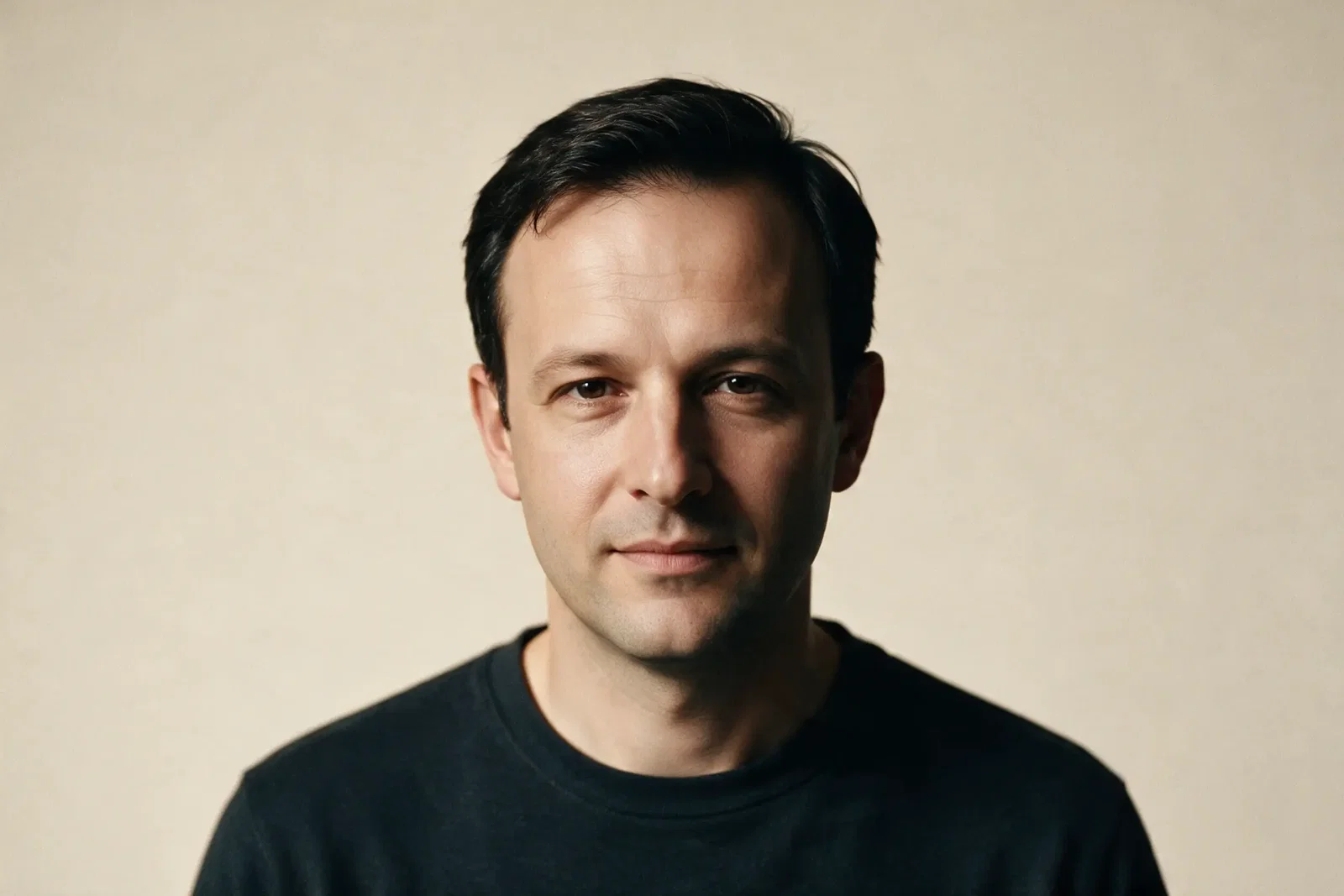 Select a marker
Where the hairline sits
A natural adult hairline sits roughly four fingers above the brow and follows the curve of the skull, not a fashion. It is set for the face you will have at sixty, not the one you had at eighteen.
Done badlyToo low, too flat, and suddenly everyone can date the procedure
Ask any clinic to point these out in their own gallery.
A surgeon who designed the result will talk you through all six without hesitating. A salesperson will talk about graft counts and the price.
Illustration · Marker positions are indicative and drawn on a visualisation produced for London Assistance, not on a patient photograph.
Why our results look less dramatic than theirs
One photograph. Six ways to lie with it.
Nothing below has been retouched, and no hair has been added. It is the same single frame every time — only the lighting, the crop and the styling change. This is how a mediocre result is sold as a spectacular one, and it is done in-camera, so it never shows up as editing.
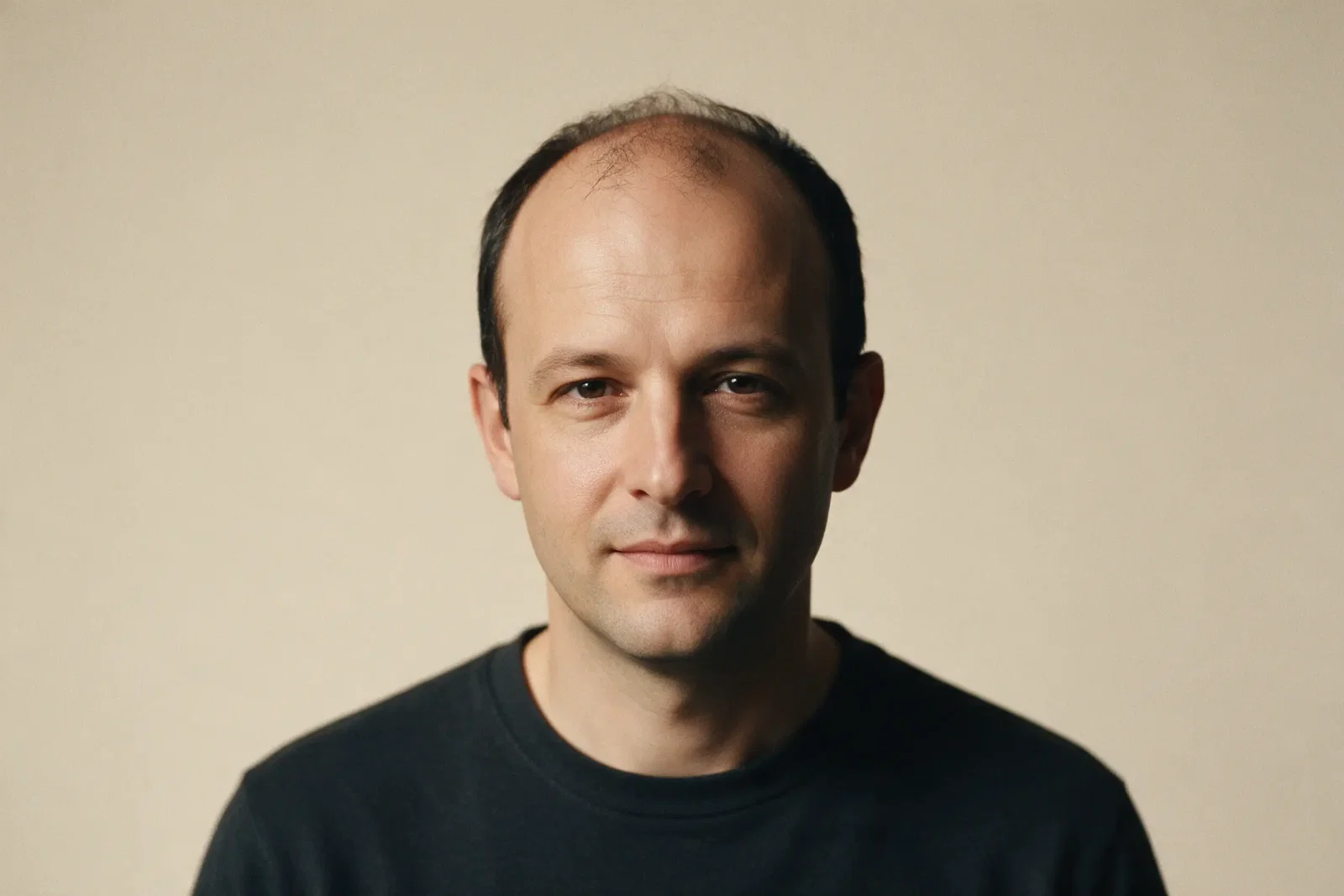
What we publish
The honest one
Flat, even, front-on light at the same distance every time, with dry hair and the full head in frame. It is the least flattering way to photograph anyone, which is exactly why it is the only one worth trusting.
So when you compare us with a clinic whose gallery looks better — compare the lighting first.
We photograph every result the same way: flat front light, dry hair, fixed distance, full head in frame, same camera, same room. It makes our gallery look quieter than most. It also means that what you see is what you would see standing in front of a mirror.
Ask us for the unflattering photographIllustration · A single visualisation produced for London Assistance, shown under simulated lighting and crops. Not a patient photograph.