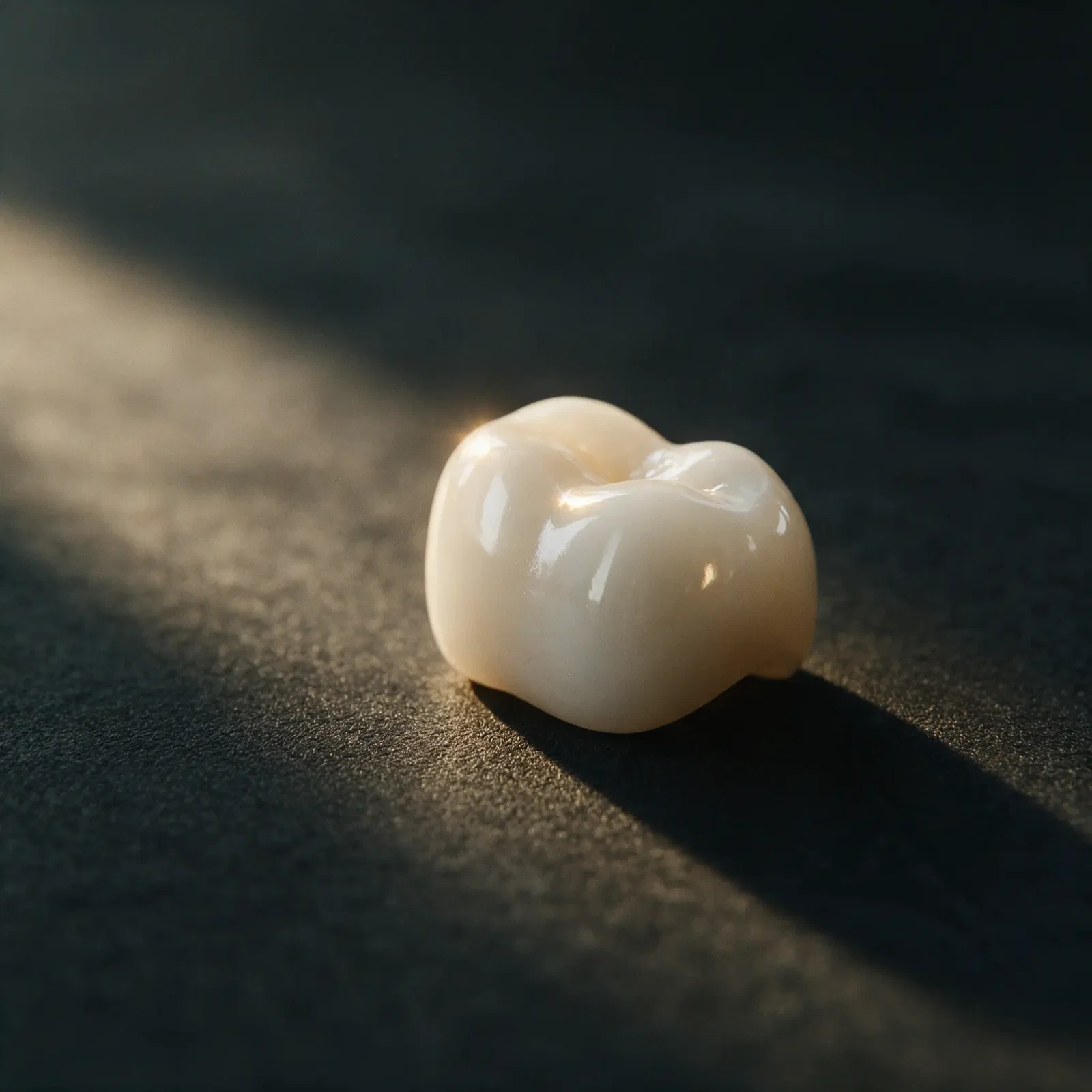
Zirconia Crowns
A crown covers the whole tooth rather than just its front face. That makes it the right restoration for a tooth that is structurally weak — heavily filled, cracked or root-treated — and the wrong one for a healthy tooth you simply want whiter. Zirconia is stronger than porcelain and handles heavy bites, which is why we use it at the back and on anyone who grinds.
A crown is the correct choice when
- The tooth is root-treated — it is brittle and needs full coverage
- More than half the tooth is filling rather than tooth
- There is a crack, or a cusp has already fractured
- It is a molar carrying heavy chewing load
A veneer is better when
- The tooth is sound and only the front face needs changing
- You want to preserve the maximum amount of natural tooth
- It is a front tooth with no existing restoration
- A clinic proposes crowning twenty healthy teeth — challenge that
Your treatment week
- 01
Day 1 — exam and x-ray
Each tooth assessed individually. Any decay or failing root treatment is dealt with before a crown goes anywhere near it.
- 02
Day 1 — scan and shade
Intraoral scan and shade selection taken in natural daylight next to your skin tone, not under clinic lighting.
- 03
Day 2 — preparation
The tooth is reduced on all surfaces to make room for the crown, then a temporary crown is fitted the same day.
- 04
Days 3–4 — milling
Crowns milled from a zirconia block in the in-house laboratory and layered for translucency where they will show.
- 05
Day 5 — trial fit
Fit, contact points and shade checked before glazing. Anything that is not right is remade, not talked around.
- 06
Days 6–7 — cementation and review
Cemented, bite adjusted, polished, then reviewed the following day. Written record with material and batch numbers issued.